Monday, December 29, 2008

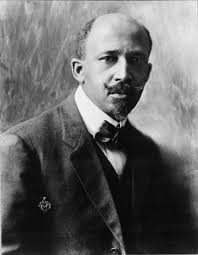
William Edward Burghardt Du Bois


W.E.B. Du Bois was born on February 23, 1868 in Great Barrington, Massachusetts. At that time Great Barrington had a very small population of blacks, something around 50 out of a population of about 5,000. Therefore he was not faced with severe racism there. Nevertheless anger and cruelty was implicitly seen in his society and that made him turn into an angry and silent person. This withdrawn behavior followed him throughout his life.
His time saw a lot of “reconstructions” to itself. The Civil Rights Acts of 1866, the fourteenth amendment, the Military Reconstruction acts, fifteenth amendment, and the Civil Rights acts of 1875. He was born in the same year as the passage of the fourteenth amendment which made all native born or naturalized persons American citizens and prohibited states specially the south to deprive them off their rights including life, liberty and property without due process of law. But as history shows amendments where passed and supported by the Republicans in the north and the southerners, who were still bitter at their northern neighbors on the civil war, started to make the black codes and other cruel laws like the Jim Crow segregation.
When he went to high school he became very interested in the development of his race. He believed it was his duty to politicize his people. Therefore even when he was at school he managed to do some newspaper reporting. Du Bois was a very talented student and like many others he desired to go to Harvard University but going to Harvard needed a strong financial support. So with the aid of his family and friends he was able to attend Fisk College, for which he had to move to Nashville, Tennessee.
There was a great difference between the north and the south at that time. This was Du Bois' first trip south. During his years at Fisk he realized the discrimination blacks had to bear and it was during these years that he had to do something to emancipate his people. Consequently, he became an American civil rights activist, leader, Pan-Africanist, sociologist, educator, historian, writer, editor, poet, scholar, writer, editor, and an impassioned orator. He tried to learn more about the south by teaching in a school; it was then that he learned that the black people lived in poverty, prejudice and segregation.

After graduation from Fisk, Du Bois entered Harvard (via scholarships) his education focused on philosophy, centered in history. It then gradually began to turn toward economics and social problems. He received his bachelor's degree in 1890 and immediately began working toward his master's and doctor's degree.
Du Bois completed his master's degree in the spring of 1891. He received a grant from President Hayes to study at the University of Berlin in Germany which was considered to be one of the world's finest institutions of higher learning. But he wasn’t able to get his degree from Berlin and was urged to get it from Harvard due to the interest of his supporters. During the two years Du Bois spent in Berlin, he began to see the race problems in the Americas, Africa, and Asia, and the political development of Europe as one. This was the period of his life that united his studies of history, economics, and politics into a scientific approach of social research. At the age of twenty-six, he began his life's work. He accepted a teaching job at Wilberforce in Ohio.
The year 1896 was a totally new start for Du Bois. He accepted a special fellowship at the University of Pennsylvania to conduct a research project in Philadelphia's seventh ward slums. This responsibility provided him with the opportunity to study Blacks as a social system. Du Bois eagerly devoted himself to his research. He wanted to find the cure to the black problem which was color prejudice. The outcome of this exhaustive endeavor was published as The Philadelphia Negro. "It revealed the Negro group as a symptom, not a cause; as a striving, palpitating group, and not an inert, sick body of crime; as a long historic development and not a transient occurrence." Du Bois is acknowledged as the father of Social Science because he was the first person to take a scientific approach to studying a social phenomenon.
After the completion of his study, Du Bois accepted a position at Atlanta University to expand his teachings in sociology. For thirteen years there he wrote and studied Negro morality, urbanization, Negroes in business, college-bred Negroes, the Negro church, and Negro crime. His studies really helped all social reforms. It is said that because of his outpouring of information "there was no study made of the race problem in America which did not depend in some degree upon the investigations made at Atlanta University."
In January of 1906 the "Niagara Movement" called after the site of the meeting was formed. Its objectives were to advocate civil justice and abolish caste discrimination; but it failed. In 1909 most members of the Niagara Movement merged with some white liberals and thus the National Association for the Advancement of Colored People (NAACP) was born. Du Bois was not completely satisfied with the group but agreed to stay on as Director of Publications and Research.
The main source of spreading NAACP policy and news concerning Blacks was the Crisis magazine, which was directed by Du Bois. Du Bois was an outspoken opponent of the scientific racism of his day. Du Bois argued extensively against the then prevalent notion that African-Americans were biologically inferior to whites and issued his critiques in the same magazine.
The NAACP was, at that time, under the leadership of whites, to which Du Bois objected. He always felt that Blacks should lead. This gave Du Bois the ability to continue his assault on the injustices done to Blacks.
World War I had dramatic affects on the lives of Black folks. Firstly, the Armed Forces refused to call up Blacks, but finally gave up and put the "colored folks" in roles which they could be pushed over by whites. Secondly, this war caused a great immigration, since the north was looking for laborers and southern blacks moved north in flocks. It was then that the northern whites became angry at them for stealing their jobs. As a result lynching became very popular and after the war black veterans went back home only to be torn off their army cloths as welcome from those whom they had fought for.
Using the Crisis as his vehicle he attacked all the injustice he saw. His strong attacks and the reaction of his followers caused some congressional actions such as bringing forth legal actions against lynches and setting up a federal work plan for returning veterans. This period was the pinnacle of his success.
Shortly after the Armistice was signed, Du Bois headed to France in 1919 to represent the NAACP as an observer at the Peace Conference. It was there that he decided to organize a Pan-African conference to bring attention to the problems of Africans around the world. But the concept didn’t work due to the lack of interest by the more influential black organizations. He decided to hold another Pan-African meeting in 1921 which failed even more severely.
Other movements like the Garvey movement, which Du Bois tried to ignore first but then started criticizing, received much more mass attention than did Du Bois intellectual movement.
Du bois tried for the third time to hold the Pan-African meeting but as expected the turnout of this one was small too. After the conference he headed for Africa, during the trip through "the eternal world of Black folk" he made a characteristic observation–"The world brightens as it darkens." This trip changed his point of view towards the African American people and what he had been preaching all those years. Du Bois noted how America avoided dealing with the issues of color, and how his approach of "educate and agitate" appeared to have no impact upon people. He felt that his ideological approach to the "problem of the twentieth century" had to be revised. Du Bois' trip to Russia in 1927, after the Russian revolution, his learning about Marx and Engels, his seeing the beginning of a new nation form with regard to class, became a pretext for the revision he had in mind. He wasn’t able to trust white capitalists and white workers anymore so he went on to do everything in a segregated socialized economy.
By 1930 he had become thoroughly convinced that the basic policies and ideals of the NAACP must be modified or discarded. There were two alternatives: Change the board of directors of the NAACP (who were mostly white) which meant substituting a group which agreed with his programs, or leaving the organization.
He resumed his duties at Atlanta University and completed two major works. His book Black Reconstruction dealt with the socio-economic development of the nation after the Civil War. This masterpiece portrayed the contributions of the Black people to this period, whereas before, the Blacks were always portrayed as disorganized. His second book of this period, Dusk of Dawn, was completed in 1940 and expounded its view to Africans and African Americans struggle for freedom.
During the last phase of his political and social activities he committed himself to something beyond protecting only a single social group to a "to a world conception of proletarian liberation." As the chairman of the Peace Information Center, he demanded the outlawing of atomic weapons. After which he was indicted under the foreign Agents Registration Act. Even though he was acquitted but this made him say –"In my own country for nearly a century I have been nothing but a NIGGER." By the time the U.S. press published this statement, he was residing in Ghana; an expatriate from the United States. Du Bois became a Ghanaian citizen and an official member of the Communist party.
On August 27, 1963, on the eve of the March on Washington, Du Bois died in Accra, Ghana at age 95.
He was honored by a few because of his Pan-Africanist activities but he was neglected by those who never saw his efforts in uniting the mentally and physically enslaved people all around the world.
________________________________________
References
Dusk of Dawn (W.E.B. DuBois)
W.E.B. DuBois: Propagandist of the Negro Protest (Elliott M. Rudwick)

Saturday, December 20, 2008

Canaan land A Religious History of African American

This book divides the whole history of the black American religious interests in different parts according to the situation dominating that time.
At the time of slavery and the peak of the emancipation talks religion was all about the Promised Land, not the Promised Land after death but the one concerning freedom and emancipation. After the emancipation and during the reconstruction the black churches who had by then become independent tried to provide their attendants with material assistance, and especially education. They considered education as a religious exercise because they desired to read the bible themselves. At that time the essence of religion was mostly experiencing the power of God’s grace within their hearts rather than observing rules and regulations. There were other groups who were after industrial education because they believed that they could only reach true emancipation through economic growth. During these times Christianity was the most popular religion among blacks they even went on to preach it in Africa. They also established their own independent churches. Among outstanding people of that time we can refer to Booker T. Washington and W.E.B. Du Bois who had very different interpretations of progress in the black society which itself showed that blacks were never unanimous on this subject.
In the second phase of the black life we encounter blacks moving from their rural life to an urban one. Two main factors cause this movement; depressed rural economy and racial discrimination. But even when they moved north they faced a lot of conflicts with their white neighbors over competition for jobs and availability of housing and many other facts. Migration also increased the number of black religions and that was due to the fact that now they encountered many different religions in the city. Jewish congregations prevailed among them and believed that it had discovered the authentic identity of black people that had been taken from them by the experience of slavery. Islam also found lots of advocates among blacks. There were groups named after Islam which were totally different from the worldwide accepted Islam like the Moorish Science. There were other people like Wallace D. Ford, Elijah Mohammad, and Malcolm X who preached Islam as well but each in a very different language. Other religious movements such as the Holiness or Pentecostalism were among the most significant trends among African Americans.
At the time of the civil rights movement there were lots of oppositions from the government to religious preachers who attached civil rights to the black freedom issue. They feared these people because they had the ability to guide people in their desired ways especially by the growth of mass communication devices such as the radio or newspapers. They were the ones who mobilized the bus boycott and announced that the struggle for freedom in blacks was a moral and religious cause. Some of these people advocated nonviolence trying to translate the Christian love into social action, some others believed that Christianity was something very personal and had nothing to do with social issues. Malcolm X was a person who after going to Mecca saw the problems of the black in the United States as a part of the international struggle of Third World peoples for human rights. This period of black movements and religious beliefs was an important period in the meaning of democracy in the history of the U.S.
Over the years black churches have continued to play their role in social issues but they have adapted themselves to the needs of the people of their time. Also with the arrival of blacks from Cuba and Haiti new religions with strong African roots have been introduced to the African American society.

As observed religion plays a very important role in the black community. But their interest in different religion at different times during the course of the history should confirm the fact that religion has always been an asylum for people. At one time there was a need for people to believe in the grace of god who could and would free them from slavery therefore Christianity would become of great popularity at that time. At other times they felt a necessity to attach themselves to a great history and stand up strongly against others and at those times Judaism would serve as the solution. At other times they felt that they needed to regulate themselves and put aside all the racial issues and become more universal and then they would convert to Islam. But in the case of blacks there has always been the case of oppression by either the slaveholder, whites or the government, therefore they were to a large extend limited to what was presented to them unless they were people of great curiosity like Malcolm X and experienced new things.
The reaction of the government to these religious interests is of great significance. We see that as long as blacks look up to a leader whose greatest scope of concern is the black community the government has mere or no intervention. But as soon as the case turns into a civil rights case or gains a more universal perspective the government intervenes.

Friday, December 12, 2008


Book Review
The War for America’s Natural Resources
BY: William R. Nester


This is a fine book by William R. Nester, first published in 1997 by Macmillan Press LTD. It consists of 256pages and includes four case-study chapters on “Farming, Grazing, and Hunting”, “ Forests, Parks, and Wilderness”, “Mines, Drills, and Energy”, and “ Dams, Irrigation, and Faucets” plus one additional chapter on “Natural Resources Policy into the Twenty-first Century” . The War for America’s Natural Resources analyzes the conflict between natural resources politics, policies, and philosophies. Each chapter and its consequent parts deeply discusses the development of policies towards America’s soil, air, forests, water and many other natural resources.
William R. Nester is a Professor in the Department of Government and Politics at St. John's University in New York. He received his PhD in political science at the University of California in 1987. He’s the author of many critically reviewed books and numerous articles mostly dealing with international relations, and American foreign industrial policies.
Considering the book chapter by chapter would lead to repetitious conclusions since the whole book as an entity tries to demonstrate the challenge between “cornucopians”, “environmentalists”, and “conservationists”. He believes that in the eyes of the first group who exploited the earth and its resources saw the natural resources of the earth as endless, unlike the other two groups they believed that the government was responsible for protecting them and their benefits. But the second group emerged as a consequence of the impact of transcendentalist philosophers of New England in the 1800’s who believed that god manifested in nature and for that reason it should be kept safe. This second group is the environmentalists who are not unanimous on whether nature has a spiritual aspect or not. They believed that an ideal society must satisfy its needs without destroying the future generation’s life. The third group emerged in the 1900’s. Other than being called conservationists they could simply be called materialists who love the forest for its lumber, the river for its water and …. Conservationists and environmentalist both believe that the government should intervene in preserving natural resources and prevent culprits from playing their own game and gaining their interests; failing to comply with sustained development.
He believes that these three group’s main purpose is to influence politics and policies concerning environmental policy wars. Therefore special interests overcome national interests. As evidence he brings up the four case-study chapters named above. He realizes that the ruling congressional committee, or subcommittees, the jurisdiction sect and the administrative part of the government all play a major role in adopting policies in favor of either group which of course would be the group in power.
Even though he himself nearly admits that other than this triangle there are other factors at work but he insists on making the role of these three groups and the interest groups adhered to them very bold. For example he refers to the fact that cornucopians failed to adopt their major agenda in the 104th congress when they were at maximum power, therefore there must have been other influential hidden aspects. Therefore this relationship is more complex than Nester puts. Other than this major shortcoming the author seems very subjective on some matters. In addition the book fails to offer further study to complete itself.
He brings up natural resource disputes in a way that political scientists can attribute to, and make use of. Therefore this book would mostly be suitable for a person trying to analyze the policies concerning environmental issues due to its great effort to provide legal details. It would also be suitable for students who are in a way involved in environmental policies because it thoroughly explains laws and policies revolving around environmental issues step by step and provides tangible examples in each case. But anyone reading this book should pay great attention to not get stuck in the three angle prison which Nester has sketched. In other words this book should not be considered the gospel of environmental issues and conflicts; it should only be looked upon as an alternative perspective.
In the first chapter where he talks about farming he refers to major problems facing depressed prices, soil erosion, and water shortages. Among the most harmful obstacles facing farmers in his view was President Reagan, by signing laws and acts like the grain embargo against the Soviet Union, the technology embargo, and his high dollar policy. But on the other hand he refers to President Clinton who revolutionized the farm policy by “signing into the law the Freedom to Farm Act, which replaced government subsidies with steadily declining transition payments over seven years”. (Pg 43)
He believes that the government policies concerning grazing faulted for setting fees well below market rates and allowing the ranchers to overgraze and thus destroy the grassland.
Unlike what is presumed the United States has a small number of regional fisheries; but even these few regions have caused the fish species to drop dramatically. Therefore he believes the government must intervene and save fishes in order to save the industry.
In the case of forests he brings up an example in which influential group’s severe attempt for veto. President Clinton signed the budget bill with a rider attached that allowed logging firms to clear-cut in fire or disease-ravished areas despite receiving 50,000 calls, letters and names on petitions. Therefore the fears of environmentalists were realized when logging corporations clear-cut little touched regions.
In the third chapter he discusses the 1872 law and Mining industry, energy policy, coal policy, petroleum policy, natural gas policy, nuclear policy, electricity policy, and alternative energy policies like fossil fuels and sun.
Since water is one of the most vital elements and Americans use it so severely as though it would never end. The government started to take part in water policies by the 1902 Reclamation Act, in which the influence of interest groups was observable in government resources. In this case it is very hard for national environmentalists and conservationists to overcome the special cornucopian interests.
The last paragraph of the book is the most outstanding one in the book which is bale to summarize the whole idea of Nester’s book; therefore it will be quoted directly: “What will the future bring? Conservationists and environmentalists alike were heartened by Bill Clinton’s re-election. Yet while most battles may tilt against cornucopians, a final victory will prove to be elusive. The war for America’s natural resources is never-ending.”
Hajar Amidian